Helping soap and cosmetic handcrafters navigate the rules and regs.

Hi, I’m Marie Gale.
Helping People Understand What’s Required.
For over 15 years I’ve been researching and following the world of laws, regulations, standards and guidelines for the handcrafted soap and cosmetic industry. What started as my personal quest to understand soap and cosmetic labeling for my own products has grown into a deep understanding of the many regulations that handcrafted soap and cosmetic makers are subject to.
My personal passion to assist others to understand and follow the labeling and other requirements grew out of all that research. If I had my way, no handcrafter would ever experience the stress and heartache of unwittingly running afoul of the the laws and regulations.
There is peace of mind in knowing that you are compliant with the applicable regulations. I’m here to help you achieve that stress-free relationship with your products and your business.
Whether you know it or not, you’ve been an invaluable resource for me throughout our years in business as I’ve relied on your many books whenever I have questions. I’ve recently purchased “Navigating the Rules & Regulations” and am going through it with tabs & a highlighter and am learning more than I ever expected. — Julia
SERVICES
Choose the right solution to fit your needs
DIY with Blog Articles & Videos
FREE
This blog has much of the basic information you need to get your labels right and comply with other regulations. Here are some pages to get you started:
If you are wondering about requirements in your state, check the State Agencies page. You can also search by subject for related articles and videos.
DIY with Books
$9.99 – $34.95
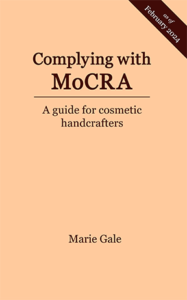
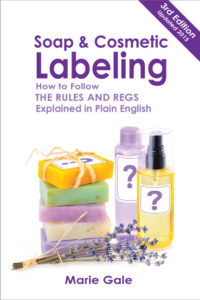
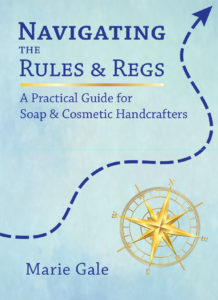
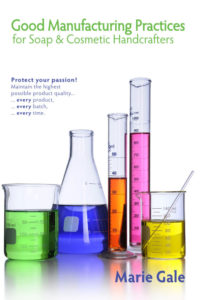
My books contain the details you need to correctly label your soaps and cosmetics and folllow the laws and regulations applicable to handcrafted soap and cosmetics. All are available from Amazon.com – just click the images below!
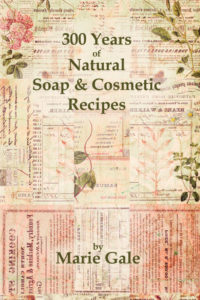
Label Review
$125 per label
If you want another set of (experienced) eyes on your label to make sure it meets all the requirements, a label review is a good choice. A Label review checks your label against the pertinent regulations. You get a checklist of showing if corrections are needed (or not), along with documentation to help you understand the requirements. Label reviews take about a week. Once your review is complete, you can send the revised label and I’ll take a look to make sure everything is in order.
I wanted my labels to be as close to compliant as I could get them. I took advantage of your label review service and can’t thank you enough for your expert advice. It was money well spent! — N.M.
Consulting
$100 – $125 per hour
Consulting is the tailor-made solution to address whatever your concerns are with your labeling, GMP, MoCRA compliance, safety substantiation, and the like. Consulting can be as simple as just answering the questions you have by email, phone or online meeting, or it can cover reviewing all your labels, ingredient declarations, website copy, safety substantiation documentation, and good manufacturing practices. It’s your call – I’m here to help with what you need.
I speak on behalf of the entire team that we are all very appreciative of your work in helping us grow our brand. It is a big step for us, and you have been instrumental in making that a reality. Thank you for your help. — D.C..
Latest blog articles
-

Cosmetic Ingredients – The Final Frontier
The evolution of cosmetic ingredients has gone from simple plants to lab-created synthetics to rainforest botanicals and now the final frontier – ingredients from outer space.
-

From “Anti” to “Authentic” Aging
Avon recently published “The Power of Ageing” takes a deep dive into how women feel about aging post-pandemic. The results are intriguing.
-

Many Ingredients in Small Amounts
If your product has many ingredients is very small amounts, it can be hard to calculate the exact descending order for the ingredient declaration. There is, however, a trick to make it easier!
-
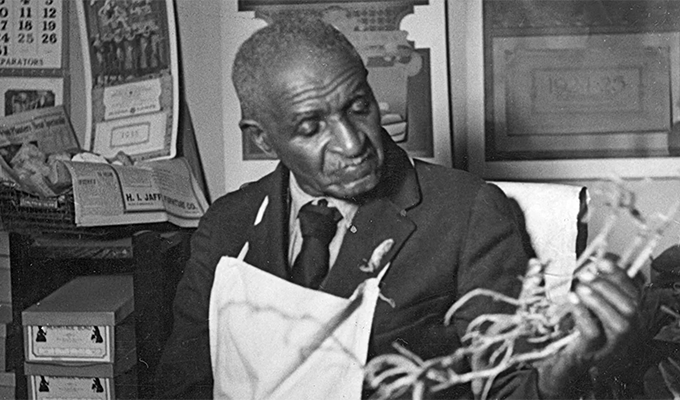
George Washington Carver’s Peanut Lotion
George Washington Carver’s work with peanuts is legendary. The uses included various cosmetics; here’s his recipe for a peanut oil lotion.
-
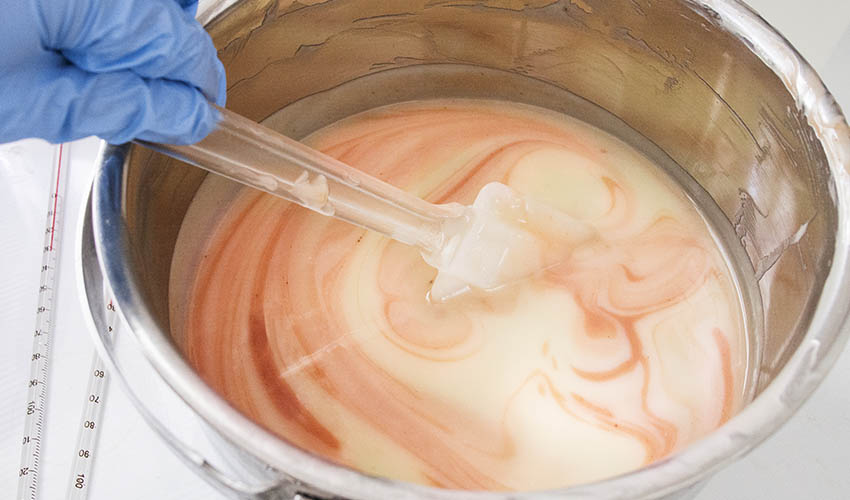
Unsaponified Oils in the Ingredient Declaration
In a soap ingredient declaration you can list what goes INTO the pot, or what comes OUT of the pot. So what do you call the unsaponified oils?
-
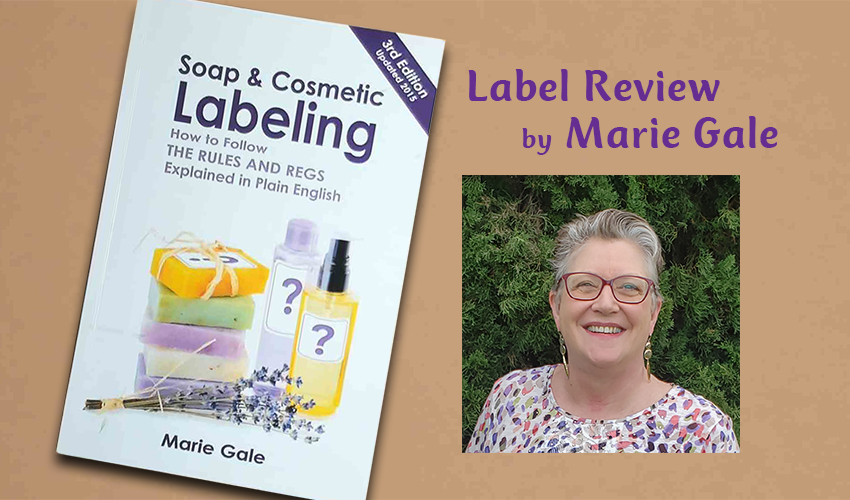
Label Review – Clockwork Orange Soap
A new video label review of Orange Clockwork Soap by Apothecary Soap covering all the basics that should be on a soap label.
-

FDA Warns Amazon
The FDA just sent warning letters to three companies that introducing unapproved new drugs into interstate commerce. What’s interesting is that one of them is Amazon.com
-
Making the Ingredients Fit
Sometimes it can be hard to make the ingredients declaration fit on a label. Here is a tip for squeezing everything in.
-
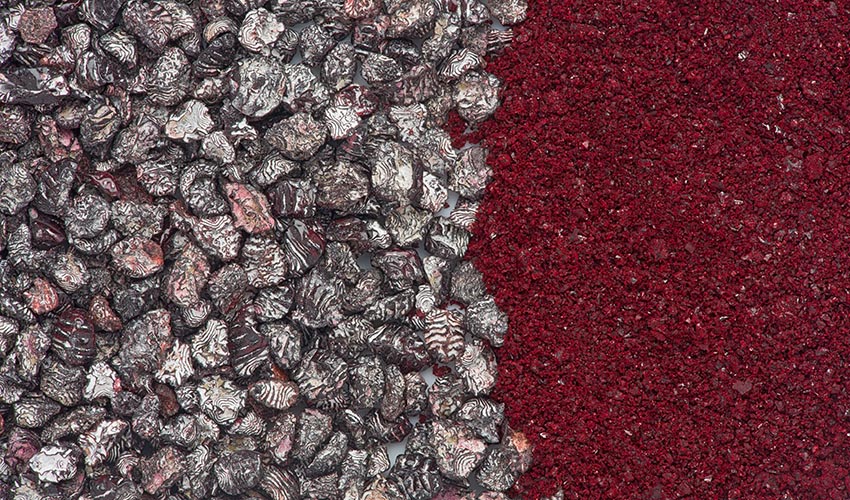
Carmine
Carmine is an approved color additive that produces a beautiful color. It comes from insects.
-
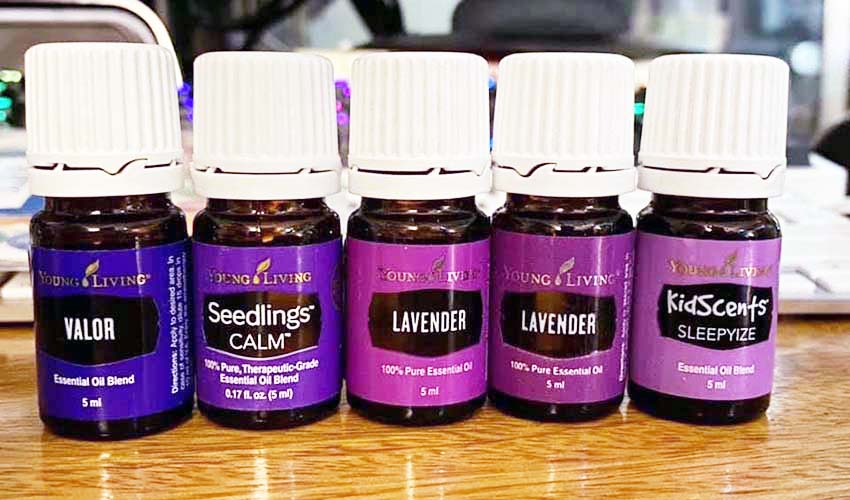
FDA Warns Young Living (Again)
The FDA has cited Young Living again over the intended use of their products. See what you can learn from their mistakes.
-
Measuring the Net Contents Statement
A tip for measuring the font size for the net contents statement on soaps and cosmetic labels to make sure it’s big enough.
-
Glycerin
Glycerin – a most versitile ingredient in food, cosmetic, drugs, tobacco, paint, and even embalming fluid. And, of course, soap.